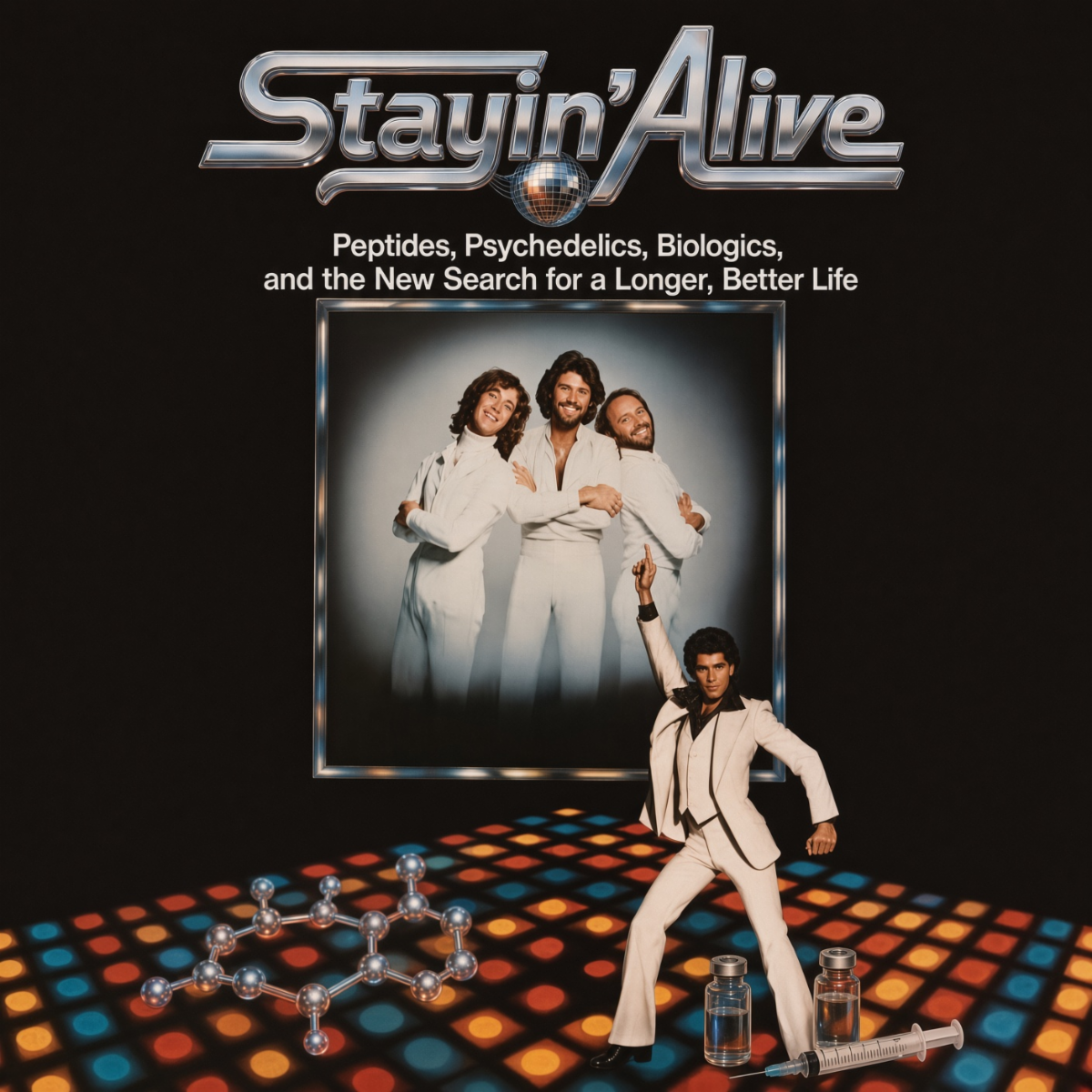
When the Bee Gees gave us the song “Stayin’ Alive,” the title captured the energy, resilience, and unmistakable confidence of the era. Decades later, it feels less like a disco anthem and more like a mission statement. The generation that once packed dance floors is now asking a different question: How do we stay strong, sharp, mobile, independent, and fully engaged for as long as possible? The goal is no longer simply to live long, it is to live better for longer. More years are valuable, but only if they come with health, purpose, mobility, clarity, and the ability to enjoy them. That desire is helping drive one of the most significant transformations in modern medicine.
For most of our lives, a drug had a familiar silhouette. It was a little white pill in an amber bottle, prescribed during an office visit and picked up at the neighborhood pharmacy. The process was predictable. A patient saw a doctor, the doctor wrote a prescription, and the pharmacist filled it. That system is not disappearing, but it no longer has the medicine cabinet to itself. Today’s cabinet may contain peptides designed to imitate signals already found in the body, biologics created through living systems, psychedelic compounds moving from counterculture into clinical research, and treatments prescribed through a smartphone and delivered directly to the front door. The pharmacy itself may not even have a physical address. It may be an app, a subscription, a telehealth platform, or a digital relationship with a company such as Ro or Hims & Hers.
Welcome to the new world of medicine, where the molecule is changing, the delivery system is changing, and even our definition of good health is changing. This is not just about staying alive. It is about staying alive well.
More Than Another Birthday
Medicine has always tried to extend life. Vaccines, antibiotics, blood pressure medications, cholesterol treatments, cancer therapies, and countless other innovations have prevented premature deaths and added years to millions of lives. The new frontier is more ambitious. The question is no longer only, “How do we keep people from dying?” It is increasingly, “How do we help people remain capable while they are living?” That distinction separates lifespan from healthspan.
Lifespan measures how long we live. Healthspan considers how many of those years are spent in reasonably good physical, mental, and cognitive health. The National Institute on Aging describes healthy aging in terms of maintaining quality of life and living as independently as possible.
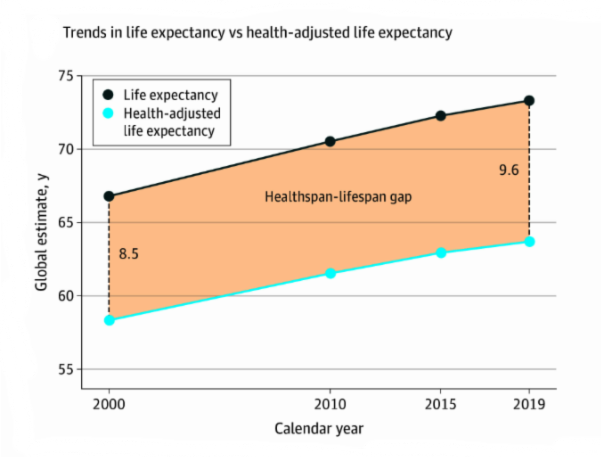
Source: National Library of Medicine & PubMed Central | Global Healthspan-Lifespan Gaps Among 183 World Health Organization Member States
Most of us are not searching for immortality; we are searching for more time on the golf course, more trips with family, more years in our homes, more energy for grandchildren, more productive years at work, and more mornings when the body and mind still cooperate with the plans on the calendar. In other words, the goal is not merely to add years to life. It is to add life to those years.
That goal is creating enormous demand for treatments that promise to improve metabolism, preserve muscle, reduce inflammation, sharpen cognition, address depression, improve sleep, restore sexual health, control weight, and perhaps slow some of the processes associated with aging. Some of these treatments represent major scientific advances. Others remain experimental. A few may prove transformative. Many may ultimately disappoint. But together, they are creating a new category of medicine built around a very old human desire: more time, and better time.
From the Pharmacy Counter to the Phone Screen
The traditional pharmaceutical model was built as a chain. A drug company developed a medicine. A physician prescribed it. A pharmacy dispensed it. An insurer often determined how much the patient paid. The emerging model looks more like a connected platform.
A consumer may first hear about a treatment through a television commercial, social media post, podcast, online advertisement, or conversation with a friend. From there, the consumer completes a digital questionnaire, provides medical information, communicates with a licensed healthcare professional, and receives a prescription when the clinician determines that treatment is appropriate. The medication may then be filled by a partner pharmacy and shipped directly to the patient. Ro describes a model in which patients complete an online medical assessment, receive a recommendation from a licensed provider, and may have prescribed treatment delivered to their homes. Hims & Hers similarly connects consumers with licensed healthcare providers and partner pharmacies that can fulfill and ship prescriptions. Some platforms also provide laboratory testing, insurance assistance, coaching, dose management, recurring check-ins, and direct messaging with a care team.
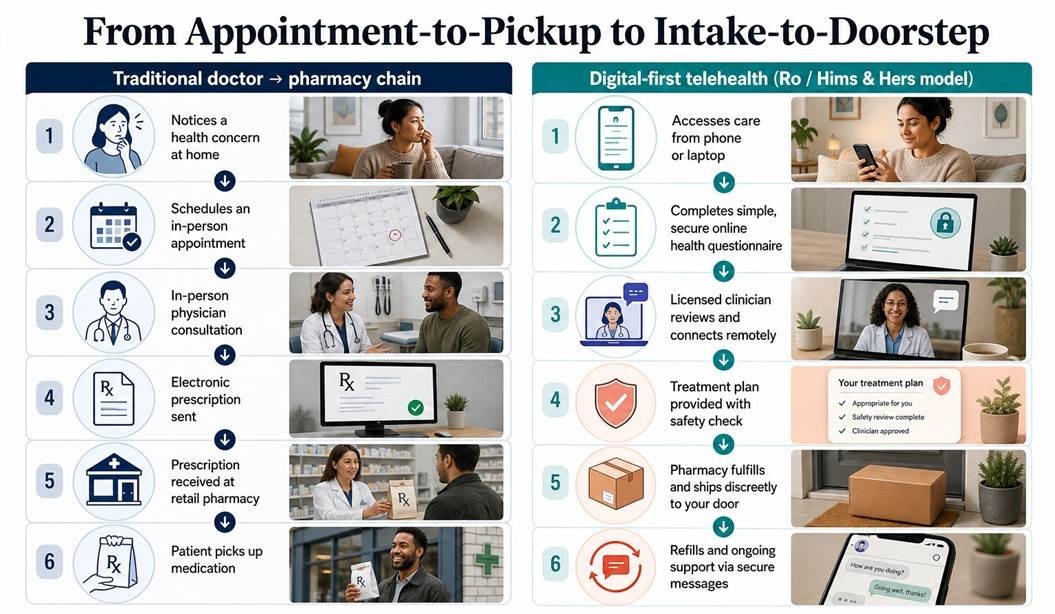
Source: Perplexity, Ro.co
Convenience is not a trivial benefit, especially as people age. Transportation, mobility, geography, scheduling, and discomfort discussing sensitive conditions can all become barriers to care. A well-run digital platform can make it easier to seek treatment for weight, sexual health, hair loss, mental health, sleep, or other conditions that patients might otherwise ignore. But convenience also changes the psychology of medicine. When a treatment is packaged with polished branding, simple monthly pricing, attractive testimonials, and a bright button that says “Get Started,” a medical decision can begin to feel like an ordinary online purchase.
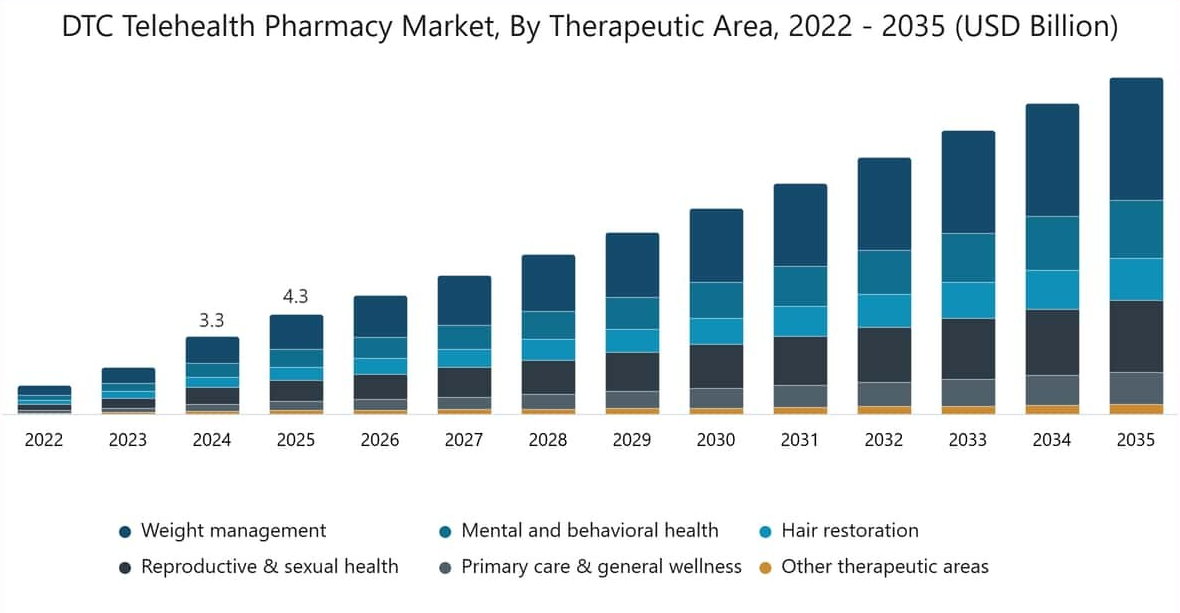
Source: GM Insights | DTC Telehealth Pharmacy Market Size & Share 2026-2035
The old pharmacy dispensed the medicine. The new platform may help market it, introduce it, facilitate the clinical evaluation, arrange fulfillment, deliver it, monitor it, and renew it.
The medicine may belong to the pharmaceutical company, but the relationship may belong to the platform. That relationship may become one of the most valuable assets in the new healthcare economy.
Peptides: Following the Body’s Own Rhythm
Peptides have become one of the most fashionable words in medicine, wellness, physical recovery, weight management, and longevity. Peptides are short chains of amino acids. Many naturally occurring peptides act as messengers in the body, helping regulate processes involving metabolism, appetite, growth, hormones, inflammation, and other biological functions. That helps explain their appeal. Instead of simply introducing a foreign chemical, a peptide treatment may imitate, enhance, block, or modify a signal the body already uses.
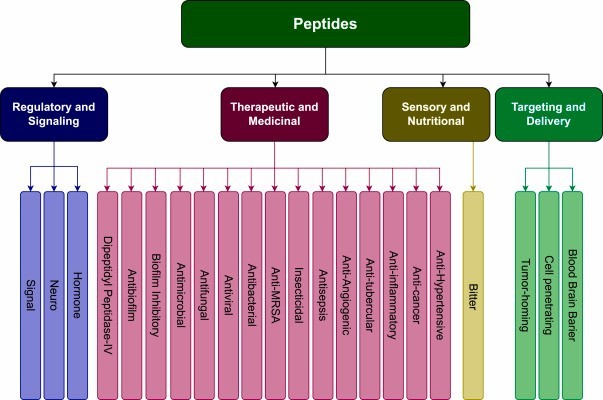
Source: Science Direct | Peptide classification landscape: An in-depth systematic literature review on peptide types, databases, datasets, predictors architectures and performance
The most recognizable peptide examples are GLP-1 medicines. GLP-1 receptor agonists are synthetic peptide medications that mimic natural gut hormones to help regulate blood sugar, digestion, and appetite. The FDA approved the first medicine in this class in 2005, and several are now approved for diabetes, chronic weight management, or related medical indications. Some of these medicines have implications that go beyond weight loss. In 2024, the FDA approved Wegovy for reducing the risk of cardiovascular death, heart attack, and stroke in certain adults with cardiovascular disease and either obesity or overweight.
That is where the theme of “Stayin’ Alive” becomes more than clever wordplay. A treatment that helps a patient lose weight may also improve mobility, reduce stress on joints, help manage blood sugar, and, for certain patients and indications, reduce serious cardiovascular risk. The potential benefit is not simply a smaller number on the scale. It may be more active and healthier years. The success of GLP-1 medicines has also created broader excitement around peptides. That excitement, however, can produce a dangerous halo effect.
There is a significant difference between an FDA-approved peptide medicine, a medicine prescribed for an off-label use, a legitimately compounded product created for a specific patient need, and an experimental peptide marketed online for anti-aging, muscle growth, injury recovery, or longevity. They may all be called peptides, but they have not all been studied, tested, approved, or manufactured to the same standards. Compounds such as BPC-157, CJC-1295, MOTs-C, ipamorelin, and other so-called wellness peptides are increasingly discussed in longevity clinics, fitness circles, podcasts, and online forums. Yet the FDA has identified limited clinical information, manufacturing concerns, immunogenicity risks, or potential serious safety issues involving several peptides used in compounding. The word “peptide” describes the type of molecule. It does not tell us whether the treatment has been proven safe, proven effective, approved for a particular purpose, or manufactured consistently. Peptides may become an important part of staying alive and staying well. But the label matters.
Biologics: When Medicine Comes to Life
Biologics sound like something from the future, but they have been part of medicine for many years. Vaccines, blood products, therapeutic proteins, antibodies, cells, tissues, and gene therapies can all fall within the broad category of biologic products. Unlike many conventional drugs that are chemically synthesized, biologics are often created through or derived from living systems. They can be much larger and more structurally complex than traditional small-molecule medicines. What is new is their increasing sophistication. A conventional drug may influence a broad biological process. A modern biologic may be engineered to bind to a particular target, alter an immune response, replace a missing protein, deliver genetic instructions, or modify a patient’s own cells.
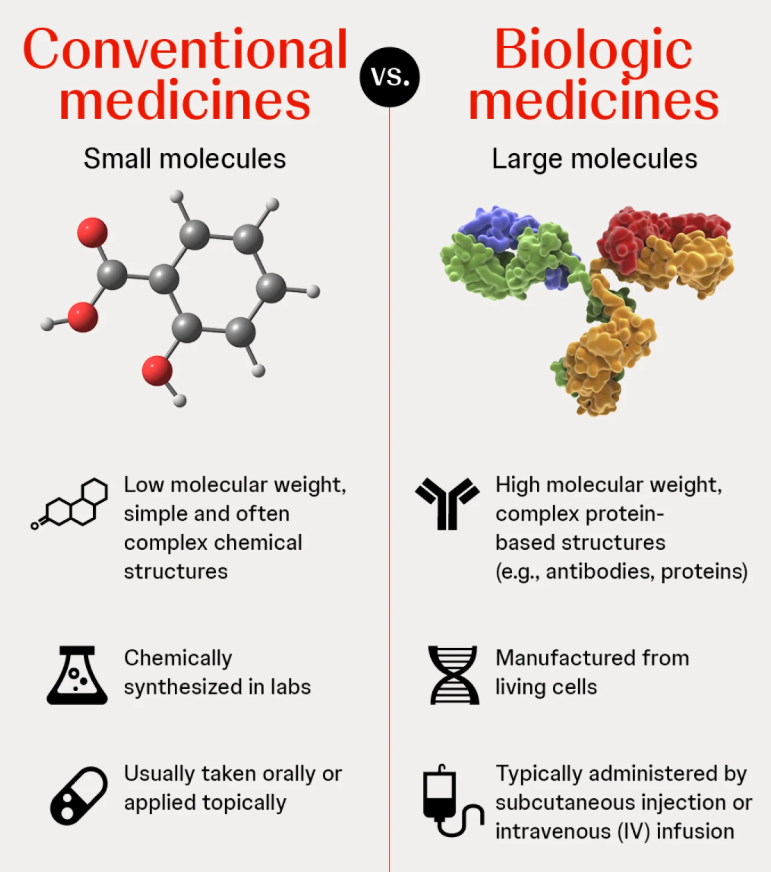
Source: Johnson & Johnson | What Are Biologics?
Traditional medicines often act on the body. Biologics increasingly attempt to work with it, redirect it, or reprogram it. This creates possibilities for treating cancers, immune disorders, rare diseases, inflammatory conditions, and genetic illnesses that were once difficult or impossible to address. It also creates a new set of challenges. Biologics can be complicated and expensive to manufacture. They may require refrigeration, specialized administration, infusions, laboratory monitoring, or treatment at a medical facility. Because their production is closely tied to living systems and manufacturing processes, they can be more difficult to reproduce than conventional chemical drugs.
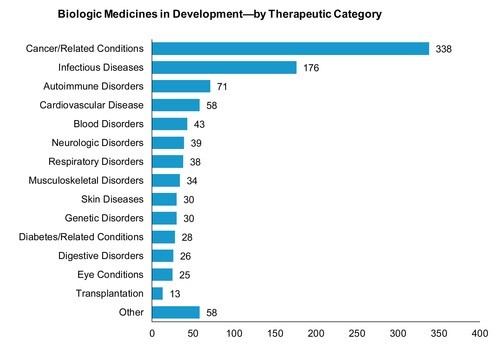
Source: Excelra | Biologics – The Biotech Drugs Transforming Medicine
This is why the future of biologics may depend on much more than inventing a successful molecule. It may depend on manufacturing expertise, diagnostic testing, storage and delivery systems, patient monitoring, specialized treatment centers, and biosimilars that create additional competition. For patients, the result could be more precise and effective treatment. For the healthcare system, the result could be significantly greater complexity and cost. The medicine cabinet of the future may therefore look less like a shelf of bottles and more like an entire treatment ecosystem.
Psychedelics: From Counterculture to Clinical Culture
Of all the new areas of medicine, psychedelics may be the most culturally fascinating. Substances once associated with rebellion, recreation, criminalization, and the counterculture are now being discussed in medical schools, research laboratories, investment presentations, and clinical development programs. The same generation that witnessed the first psychedelic era may now witness an attempt to create a regulated medical version of it. Psychedelic compounds are being formally studied for potential use in psychiatric and substance-use conditions. In July 2026, the FDA finalized guidance for companies conducting clinical investigations of psychedelic drugs. The guidance addresses the unusual scientific, safety, and trial-design issues created by these treatments.
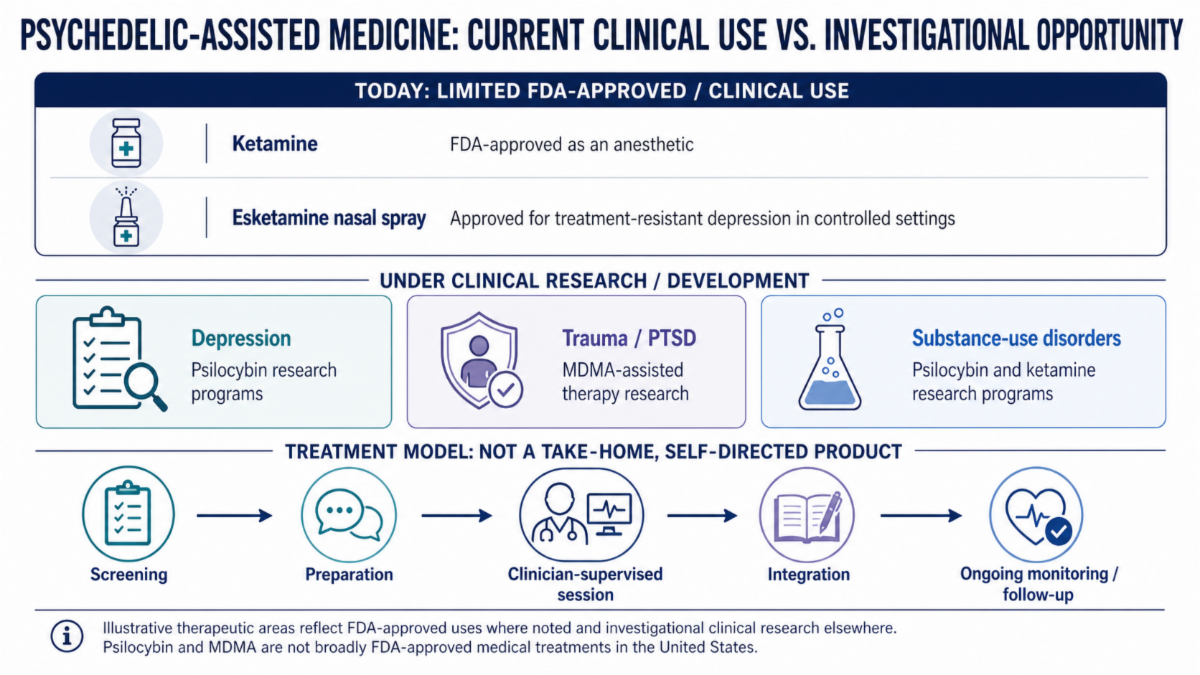
Source: National Institutes of Health | Psychedelic and Dissociative Drugs as Medicines
That is meaningful progress, but it is important to understand what it does and does not mean. Formal research is not the same as approval. An expedited development program is not proof of effectiveness. A promising early study is not the same as a safe and proven treatment available for general use. Psychedelic medicine may also be very different from both traditional prescribing and ordinary telehealth. The treatment may require medical and psychological screening, preparation, a controlled environment, professional supervision, hours of observation, and continuing follow-up. The FDA is actively considering issues related to the potential future therapeutic use of psychedelic products in supervised and supportive settings.
In this model, the drug may be only one part of the medicine. The physical setting, the clinician, the psychological support, the patient’s expectations, and the follow-up care may all influence the experience and the outcome. That could create an entirely new healthcare infrastructure involving specialty clinics, trained facilitators, psychiatric professionals, monitoring systems, digital support tools, and carefully designed treatment protocols.
It also creates difficult questions. Who is qualified to administer the treatment? How should patients be screened? How much supervision is enough? What happens when a patient experiences a severe or prolonged psychological reaction? How should the treatment interact with existing psychiatric medications? Who will pay for hours of professional care?
Mental health is an essential part of healthspan. A person can be physically alive but unable to fully participate in life because of depression, trauma, addiction, anxiety, or emotional distress. If psychedelic research eventually produces safe and effective treatments for some of these conditions, the impact could be significant. But once again, what is becoming culturally familiar should not automatically be treated as clinically proven.
A Better Way to Stay Alive
The pursuit of a longer, healthier life is nothing new. What is new is how quickly science and technology are expanding the possibilities.
Consumers now have access to a growing marketplace of clinics, supplements, peptides, diagnostics, injectables, digital platforms, and personalized treatments promising improvements in energy, cognition, metabolism, mobility, and longevity. At its best, this evolution can improve access to legitimate care and meaningful innovation. At its worst, it can sell hope faster than science can validate it.
Aging is not a single disease, and there is unlikely to be one miracle drug that solves it. Better aging will more likely come from a combination of traditional medicine, new treatments and compounds, nutrition, exercise, sleep, preventive care, diagnostics, technology, and ongoing monitoring.
As these advances move from laboratories into everyday medicine, their impact could extend well beyond healthcare. New drugs, biologics, diagnostics, delivery systems, and digital technologies could reshape industries and create new areas for investment as capital follows innovation.
Ultimately, we want more than additional years. We want more time with energy, independence, and minds and bodies that can keep pace with the lives we have built. The opportunity ahead is not simply to live longer, but to live better, and to embrace the innovation that may make both possible.
Principle Wealth